E ZPass Scam Text 2025: How to Spot and Avoid the Fake Toll Messages
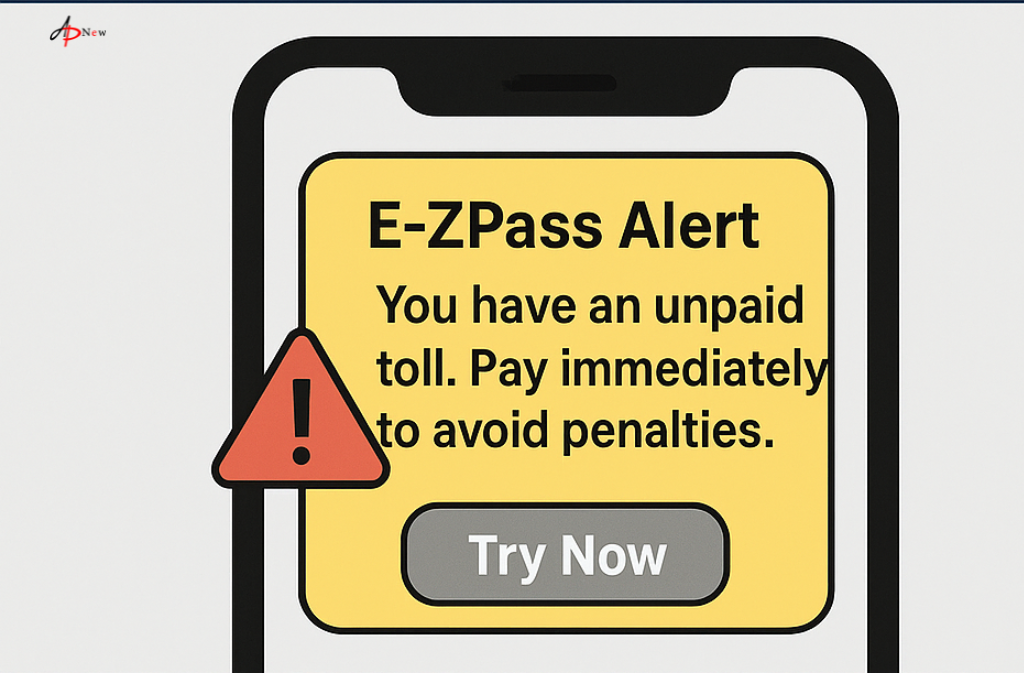
You’re driving home, your playlist humming, when a text flashes on your phone:
“E-ZPass Alert: You have an unpaid toll. Pay immediately to avoid penalties.”
Heart skips. You panic. Did you miss a toll?
Before you even think about clicking that link — stop.
Because there’s a good chance that text isn’t from E-ZPass at all.
Welcome to the world of the E ZPass scam — a fast-spreading smishing (SMS phishing) scheme that’s tricking thousands of drivers across the U.S. every month.
What Is the E ZPass Scam (and How It Works in 2025)
The E-ZPass scam is a text-based phishing attack designed to steal your personal or financial information.
Scammers send messages pretending to be from E-ZPass or a toll authority. The text usually claims you owe a small toll or late fee — something believable, like $3.25 or $5.75 — and includes a fake payment link.
Click that link, and you’re redirected to a spoofed website that looks nearly identical to the real E-ZPass portal. Once you “pay,” your credit card info, phone number, and even license plate are stolen.
In 2025, the scam has evolved. According to the FBI’s March 2025 bulletin, reports of fake toll messages have spiked across New York, Pennsylvania, Virginia, and Maryland — all states where E-ZPass operates.
Why it works:
Because most of us drive. We see “unpaid toll,” and it feels urgent, official, and familiar.
How to Spot a Fake E-ZPass Message
Scammers are clever — but they’re not perfect.
Here’s how to tell a real toll notice from a phony scam text.
Red Flags in a Scam Message
-
The link doesn’t look right (example:
ezpass-paynow[.]comortollfixusa[.]net) -
The text is generic — “Dear driver,” instead of your name or account number
-
There’s pressure: “Pay now or your account will be suspended.”
-
Poor spelling, grammar, or weird punctuation
-
It asks for credit card or banking info directly in the message
Real E-ZPass Communications
| Official Source | Scam Message |
|---|---|
| Comes from official .gov or .com websites | Sent from random short URLs |
| Personalized with account details | Generic “Dear customer” |
| Uses no threats | Uses fear and urgency |
| Never requests payment by text | Demands instant payment via link |
If you’re ever unsure, don’t click.
Go directly to your state’s official E-ZPass website — like e-zpassny.com or ezpassva.com.
Real Warnings from the FBI, FCC, and State DOTs
This isn’t some internet rumor.
The FBI, FCC, and multiple state Departments of Transportation have all confirmed these scams are active — and growing.
-
The FBI’s Internet Crime Complaint Center (IC3) warns that E-ZPass text scams have surged since early 2025, especially along the I-95 corridor.
-
The FCC published a consumer alert titled “How to Spot and Avoid Toll Road Payment Scam Texts.”
-
The New York Thruway Authority and New Hampshire DOT have both issued press releases reminding drivers that they never send payment requests via text or email.
Thousands of smishing reports have already been logged this year — and experts expect numbers to keep climbing as scammers use AI-generated text messages that look increasingly “official.”
What to Do If You Get an E-ZPass Scam Text
If you’ve received one of these texts, don’t panic — but act smart.
Step-by-step:
-
Don’t click the link.
Just delete the message. -
Report it.
Forward the text to 7726 (SPAM) — it notifies your carrier. -
Check your account on your state’s real E-ZPass website.
If your balance looks fine, it was a scam. -
Report it to the authorities:
- ic3.gov (FBI)
- reportfraud.ftc.gov (FTC)
-
Changed your passwords if you clicked or entered info.
Then monitor your credit or bank accounts for suspicious charges.
Tip: Save your real E-ZPass site as a browser bookmark. Never rely on text links.
How to Protect Yourself from Toll Scams and Smishing Attacks
You don’t need to be a tech expert to stay safe.
Just follow a few simple rules that cybersecurity pros swear by:
-
Enable spam filters on your smartphone.
-
Use two-factor authentication for your E-ZPass or any payment accounts.
-
Update your device software — it closes security holes scammers exploit.
-
Avoid paying through third-party links or QR codes sent via text.
-
Educate family members (especially older parents) who may be less tech-aware.
Remember: legitimate toll agencies don’t use random texting platforms.
If it feels sketchy — it probably is.
Why E-ZPass Scams Are Rising in 2025
A few years ago, toll scams were obvious. Bad grammar, weird links — easy to spot.
But in 2025, scammers have upgraded.
Three big reasons why:
-
More states have gone cashless.
With toll booths disappearing, online payments are the norm — making scams more believable. -
AI makes messages cleaner.
Scammers now use AI to craft texts that read like official notifications. -
Economic pressure.
When people are stressed, they react faster — exactly what scammers count on.
Cybersecurity experts estimate that smishing attacks have increased more than 40% year over year, with toll-related scams among the top offenders.
Official E-ZPass Websites (Bookmark These!)
If you ever need to verify your toll balance or pay a bill, go straight to these official sites — never through a text.
| State | Official Website |
|---|---|
| New York | e-zpassny.com |
| Virginia | ezpassva.com |
| Pennsylvania | paturnpike.com |
| Maryland | ezpassmd.com |
| New Jersey | ezpassnj.com |
Each of these portals uses secure HTTPS connections and never sends payment links via text or social media.
Spread the Word — and Stay One Step Ahead
Scammers thrive on silence.
If you get a fake toll message, don’t just delete it — tell someone.
Share this info with friends, coworkers, or on local community groups. The more people know, the less power these scams have.
And next time your phone buzzes with a “toll violation notice,” just smile and remember:
Real toll agencies don’t text you at dinner time.
FAQs
Q: Is the E-ZPass text I got a scam?
Most likely, yes. E-ZPass never asks for payments or personal details via text message.
Q: Does E-ZPass ever send email or text notices?
No. Official communication happens only through your account dashboard or postal mail.
Q: What should I do if I already clicked the link?
Immediately change your E-ZPass and bank passwords, contact your card issuer, and report it to the FTC and FBI.
Q: Is there really an E-ZPass scam going around right now?
Yes. Multiple states have issued active warnings in 2025 about ongoing toll text scams.
Q: How can I tell if an E-ZPass notice is real?
Real notices come only from official state domains (like e-zpassny.com) and will never demand urgent payment via text.
Final Thoughts
Scams are getting smarter — but so are we.
The best defense isn’t paranoia; it’s awareness.
If a message feels off, take a breath, double-check the link, and trust your gut.
Because the real toll here isn’t the unpaid $3.50 — it’s the cost of losing your identity to someone hiding behind a fake E-ZPass logo.
For more, visit: apnew.co.uk





Post Comment