Edge AI Implementations: Transforming Real-Time Intelligence
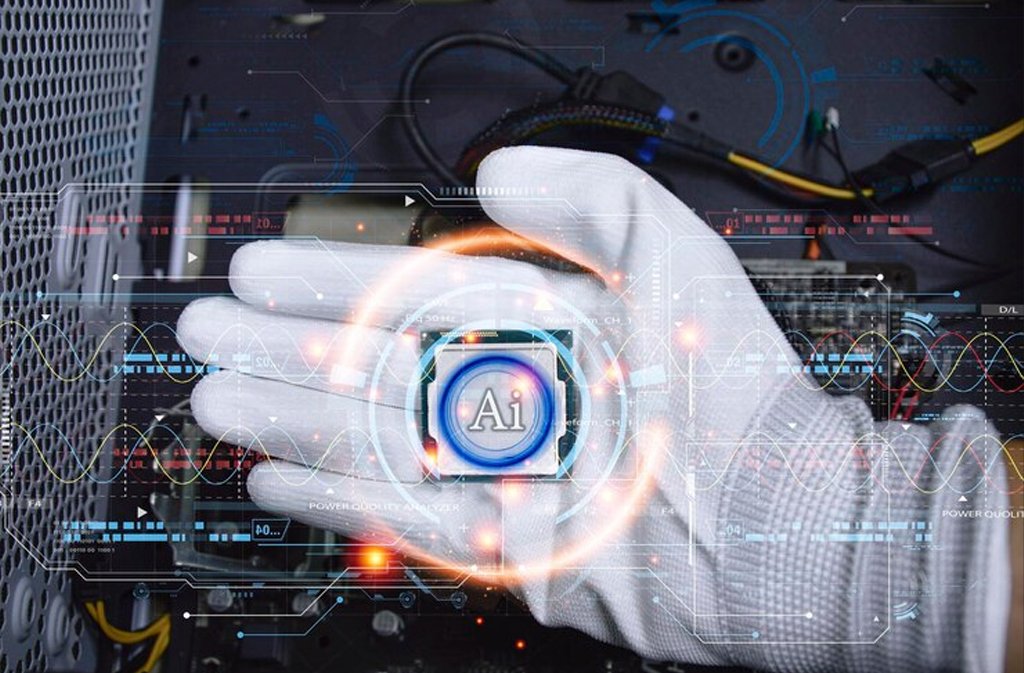
Technology is moving closer to where data lives. Instead of sending everything to the cloud, smart devices are now learning, thinking, and deciding on their own. That’s the power of Edge AI implementations — where artificial intelligence meets real-time action, right at the edge of networks.
From self-driving cars to predictive maintenance in factories, edge AI isn’t a far-off concept anymore. It’s quietly shaping how machines respond, adapt, and optimize processes — instantly. But what makes it so effective? And why are industries racing to adopt it? Let’s unpack what’s behind this technological leap.
What Is Edge AI?
At its simplest, Edge AI means running artificial intelligence algorithms directly on devices — not in distant cloud servers. The “edge” refers to the local environment where data is created: sensors, cameras, wearables, or industrial machines.
Instead of sending gigabytes of raw data to the cloud, these devices process information locally. The result is faster response times, better privacy, and reduced bandwidth costs.
For example:
-
A smart security camera can detect suspicious movement instantly without waiting for cloud analysis.
-
A manufacturing robot can predict mechanical faults before a human notices.
-
A connected car can react to road conditions in milliseconds.
These are real-world edge AI implementations — blending computation, connectivity, and intelligence at the source.
Why Edge AI Implementations Matter in 2025
In 2025, speed and autonomy define technological advantage. Businesses are no longer satisfied with delayed analytics; they need decisions made in real time. Edge AI implementations bridge this gap between sensing and acting.
1. Real-Time Decision Making
Milliseconds matter. In healthcare, a smart wearable can detect irregular heart rhythms and alert doctors instantly. In energy management, local AI systems can balance loads before grid failures occur.
2. Enhanced Privacy and Security
Since sensitive data is processed locally, fewer details are exposed to external servers. This is vital for sectors handling personal or proprietary data, such as finance and defense.
3. Reduced Latency
Traditional AI depends on cloud connections. But what happens in areas with poor connectivity? Edge AI ensures that even offline systems remain intelligent, reliable, and responsive.
4. Cost Efficiency
By filtering and processing data at the source, companies save enormous cloud storage and transmission costs. Imagine an oil refinery analyzing thousands of sensor readings per second — it’s far more efficient to handle them locally than in a remote server farm.
Core Components of Edge AI Implementations
Successful deployment of edge AI requires more than just good algorithms. It’s an ecosystem of hardware, software, and connectivity layers working in harmony.
| Component | Role | Example |
|---|---|---|
| Edge Devices | Capture and process data locally | IoT sensors, cameras, drones |
| AI Models | Analyze patterns and make predictions | Neural networks, computer vision |
| Edge Servers | Handle heavier workloads near the data source | On-site micro data centers |
| Connectivity Layer | Links devices to cloud or local networks | 5G, Wi-Fi 6, LPWAN |
| Management Software | Updates, monitors, and scales AI across devices | Edge orchestration tools |
Each element supports the other — and together, they create the infrastructure that makes edge AI scalable, secure, and efficient.
Real-World Examples of Edge AI Implementations
Let’s take a closer look at how industries are adopting edge AI in practical, measurable ways.
Manufacturing and Industry 4.0
Factories are becoming smarter through predictive maintenance and quality inspection systems. Cameras powered by AI can detect product defects instantly. Machines equipped with vibration sensors can forecast breakdowns before they happen, cutting downtime dramatically.
Automotive and Transportation
Edge AI sits at the heart of autonomous vehicles. Cars use on-board AI chips to analyze sensor data — from cameras, LiDAR, and radar — to make split-second driving decisions. No cloud dependency means higher safety and lower latency.
Healthcare and Wearables
Smart medical devices use local AI to monitor vitals in real time. For instance, AI-driven ECG monitors can identify anomalies and alert doctors, even without an internet connection. This ensures both privacy and reliability.
Smart Cities
From intelligent traffic lights to waste management, edge AI enables cities to respond dynamically to changing conditions. Cameras and sensors analyze congestion or pollution levels locally, triggering immediate responses.
Energy and Utilities
In power grids, edge AI balances loads and predicts equipment failures. For renewable energy sites, it optimizes energy output based on environmental conditions — without waiting for cloud input.
Challenges in Edge AI Implementations
While the benefits are huge, edge AI isn’t plug-and-play. Several challenges need attention before wide-scale adoption becomes seamless.
-
Hardware Limitations: Edge devices have less power and storage compared to cloud servers.
-
Model Optimization: AI models must be compressed and efficient to run locally.
-
Security Risks: Local devices are often exposed physically, making them vulnerable to tampering.
-
Integration Complexity: Deploying and updating AI models across thousands of devices is no small feat.
To overcome these, companies are turning to hybrid models — combining edge computing with cloud collaboration. This approach lets AI learn centrally but act locally.
The Future of Edge AI: Where It’s Heading
The coming years will see edge AI implementations evolve from niche pilots to everyday infrastructure. As chipmakers build smaller and more powerful processors, devices will gain autonomy once reserved for data centers.
Here’s what to expect:
-
Edge-native AI chips optimized for low power and high efficiency.
-
Federated learning, where AI improves collaboratively across devices without sharing private data.
-
Edge orchestration tools simplifying deployment and updates across massive networks.
-
AI-driven IoT ecosystems, blending machine learning with predictive analytics for near-instant decisions.
The next decade won’t just be cloud-first — it’ll be edge-intelligent.
Final Thoughts
Edge AI implementations are redefining how intelligence interacts with the physical world. Instead of waiting for cloud servers, devices can think and act instantly — whether it’s a drone avoiding obstacles or a sensor predicting equipment failure.
This shift isn’t just technological; it’s philosophical. It’s about empowering systems to act closer to life, where time, accuracy, and context matter most. As businesses continue to invest in autonomy and real-time intelligence, Edge AI will quietly power the backbone of our connected future.
FAQs
1. What does Edge AI mean?
Edge AI refers to running artificial intelligence algorithms on local devices instead of remote cloud servers, allowing real-time data processing.
2. Why are companies investing in Edge AI?
Because it delivers faster response times, protects privacy, and reduces data transmission costs — essential for modern IoT and automation.
3. What are some examples of Edge AI implementations?
Smart cameras, self-driving vehicles, predictive maintenance systems, and intelligent medical devices all rely on edge AI technology.
4. How does Edge AI differ from Cloud AI?
Cloud AI depends on centralized servers for processing, while Edge AI performs analysis directly on devices near the data source.
5. What’s the biggest challenge in implementing Edge AI?
Ensuring efficient deployment and security across many devices while maintaining accuracy and low latency.
For more, read: Ap New







Post Comment