Why Did Disney Created It’s a Small World: The Untold Story
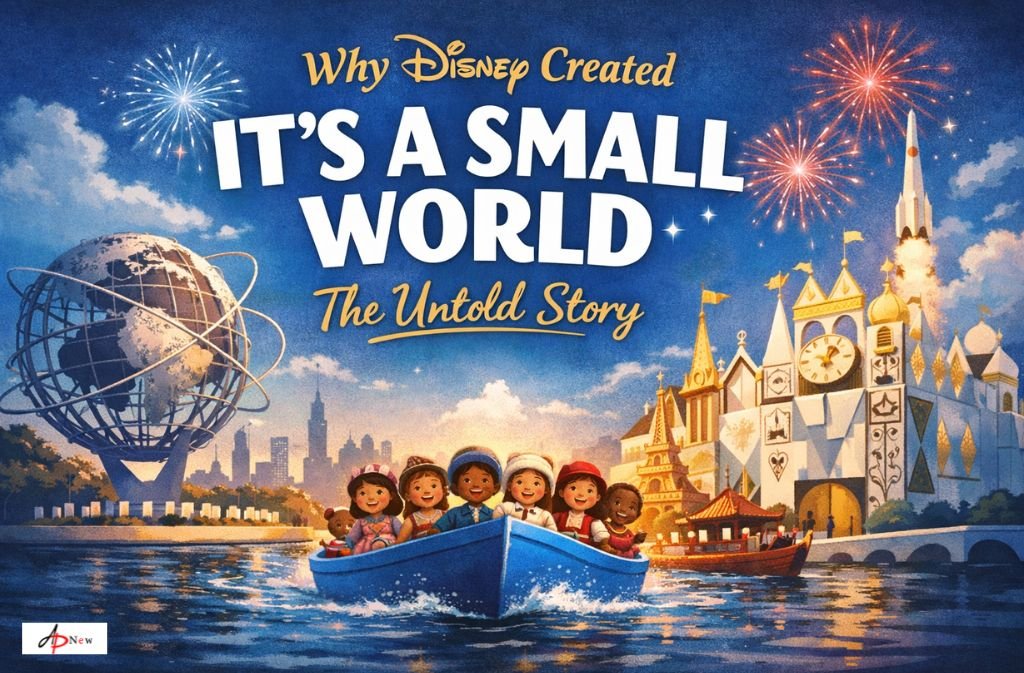
Music floats through the air. Boats glide along calm waterways. Everywhere you look, children from around the world smile and sing in perfect harmony. It’s a Small World seems simple at first glance—but there’s a lot more going on behind those cheerful dolls and colorful scenery.
So why did Disney create It’s a Small World?
It wasn’t just to entertain families or add another ride to Disneyland. In fact, the idea came from a very specific moment in history—a time when the world felt anything but small. Nations were divided, the Cold War was heating up, and fear was a daily presence. Walt Disney wanted to send a message, one that didn’t need speeches, flags, or borders to be understood. And somehow, a boat ride full of singing children became that message.
In this article, you’ll discover the real story behind It’s a Small World, from its origins at the 1964 New York World’s Fair to its lasting impact in Disney parks worldwide. Along the way, you’ll learn about the creative minds behind it, the meaning hidden in every scene, and why it continues to resonate even today.
Why Disney Created It’s a Small World
The main reason Disney built It’s a Small World was to promote unity and hope during a tense, divided era. Instead of focusing on countries, politics, or ideologies, the ride highlighted something universal: children and the simple joys they share, no matter where they’re from.
Back in the early 1960s, the Cold War shaped much of the global conversation. Fear of nuclear conflict loomed large. Walt Disney realized that stories could do what politics could not—remind people of the connections they shared. That idea became the foundation of It’s a Small World: a gentle, colorful, and musical way to show that differences are smaller than we think.
The 1964 New York World’s Fair: Where It All Began
It’s a Small World was first created for the 1964–65 New York World’s Fair. UNICEF, the United Nations Children’s Fund, sponsored the attraction. They wanted a way to communicate the organization’s mission in a way anyone could understand, without needing words or complex explanations.
Walt Disney’s team was given a clear set of instructions:
-
Keep it universally understandable
-
Avoid political statements or national bias
-
Focus on children and shared experiences
The solution was a boat ride that combined music, art, and movement. Visitors didn’t need to speak the same language to feel the ride’s message.
Children at the Center
One of the smartest creative decisions was to make children the stars of the ride. Adults carry politics, history, and bias. Children, on the other hand, represent innocence, hope, and potential.
By using children from around the world, Disney made the message emotionally universal. The dolls weren’t realistic portraits—they were playful, colorful, and stylized. That made them easier to relate to and avoided reinforcing stereotypes.
Mary Blair’s Art Style: Colorful, Bold, and Universal
The attraction’s unique look comes from legendary Disney artist Mary Blair. She avoided realism, using bright colors, geometric shapes, and patterns to communicate cultural differences without offending anyone.
Blair’s approach made the ride feel like a storybook you could step into, not a lesson to memorize. Every scene was joyful, approachable, and easy to understand, which is why visitors of all ages could connect instantly.
The Song That Sticks in Your Head
Almost everyone knows the ride’s theme song. The Sherman Brothers wrote it with simplicity in mind. Why? Because repetition works.
-
Simple lyrics make it understandable in any language
-
The melody repeats to reinforce the message subconsciously
-
Each verse flows smoothly from scene to scene
It’s clever psychology in a Disney song: you remember the idea of global unity without even realizing it.
Why Disney Didn’t Use Mickey or Other Characters
You might be surprised to learn that the original ride had no Disney characters. Why? Characters are closely tied to American culture, and the ride needed to be neutral and inclusive.
Disney wanted visitors to focus on the story, not the brand. Characters were added only decades later, in small, subtle ways that didn’t distract from the ride’s original intent.
From the World’s Fair to Disneyland
After the World’s Fair closed, Disney decided to make the ride permanent. It opened at Disneyland Park on May 28, 1966, and later expanded to:
-
Magic Kingdom at Walt Disney World
-
Tokyo Disneyland
-
Hong Kong Disneyland
-
Disneyland Paris
Despite slight changes over the years, the ride’s message has remained intact: children, music, and hope connect the world.
The Hidden Cold War Message
Here’s something most visitors don’t realize: It’s a Small World was subtly political. Instead of promoting one country over another, Disney created a message of soft power. There are no borders, no flags, no villains—just unity.
In a tense era, this was revolutionary. The ride suggested cooperation could triumph over division, and kindness could outweigh fear.
Why It’s a Small World Is Still Relevant in 2025
While many Disney rides have been replaced or updated, It’s a Small World endures. Why?
-
Its message is timeless
-
It appeals to all ages
-
It’s low maintenance and globally relevant
-
It embodies Disney’s core values of storytelling and optimism
Even now, it reminds visitors that the world feels smaller when we focus on what unites us.
Common Misunderstandings
-
It’s not just a ride for kids.
-
It’s not purely nostalgic.
-
It’s not outdated.
The simplicity is intentional. The ride was never about thrills—it was about connection.
The SIMPLE Framework Behind the Ride
Every creative decision follows this quiet blueprint:
-
Shared humanity over national identity
-
Inclusive music instead of words
-
Magic of art over realism
-
Playful children instead of adults
-
Long-term relevance over trendiness
-
Emotion-driven storytelling
It works because it’s simple, universal, and emotionally resonant.
FAQs
Q. Why did Disney create It’s a Small World?
Disney created It’s a Small World to promote global unity and peace during the Cold War. By using children, music, and art, the ride communicated a universal message without relying on politics or language.
Q. Why was It’s a Small World created for the 1964 World’s Fair?
The ride was built for the 1964–65 New York World’s Fair to support UNICEF’s mission. Walt Disney designed it so visitors from any culture could experience its message without needing translation.
Q. What is the meaning behind It’s a Small World?
The ride emphasizes that people around the world are more alike than different. It highlights shared hopes, childhood innocence, and global connection over national identity.
Q. Who designed and created It’s a Small World?
Walt Disney led the project with his Imagineering team. Mary Blair created the visual design, the Sherman Brothers composed the theme song, and Alice Davis designed the costumes.
Q. Why does the It’s a Small World song repeat so much?
The song repeats to embed the ride’s message in a memorable, emotional way. Its simplicity and repetition make it universally understandable and easy to follow.
Q. Why are there no villains in It’s a Small World?
The attraction avoids conflict entirely. The focus is on unity, harmony, and innocence, making it welcoming for all visitors.
Q. Why is It’s a Small World still at Disney parks today?
The ride remains because its message is timeless, appealing to all ages, and embodies Disney’s values of storytelling, optimism, and global connection.
Conclusion
Walt Disney didn’t just make a ride—he made a statement. It’s a Small World reminds us that even in a divided world, we share more than we differ. The boat ride that began at the World’s Fair has become a timeless symbol of optimism, connection, and hope.
Over 60 years later, the message remains as powerful and relevant as ever.






Post Comment